Medical review in progress.
Key points
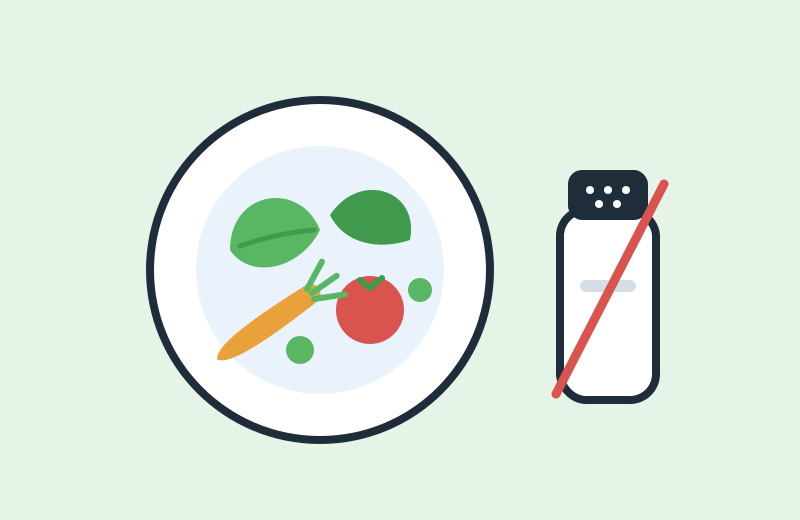
- Cutting down on salt is the most useful dietary change for the kidneys, and much of our salt is hidden.
- Limiting sugar and sugary drinks helps prevent diabetes, one of the leading causes of kidney disease.
- Protein is necessary, but in reasonable amounts.
- Potassium, phosphorus and the amount of water you drink only need watching if your doctor asks you to.
- A dietitian can adapt your favourite dishes without taking away their flavour.
Salt: the hidden enemy
Too much salt raises blood pressure, and blood pressure that is too high damages the kidneys. The salt added at the table is only part of the problem: a large share of the salt we eat is already in our food. The main hidden sources are:
- stock cubes and powdered seasonings;
- smoked or salted fish, salt cod, dried shrimps;
- tinned foods, processed meats and ready-made dishes;
- savoury snacks, crisps and some breads.
To add flavour in other ways, rely on garlic, onion, ginger, chilli, lemon, fresh herbs and the spices of our own cooking. Your taste buds gradually get used to less salt.
Be careful with “low-sodium” or “reduced-salt” substitutes: many contain potassium, which can be dangerous when the kidneys are diseased. Do not use them without your doctor's advice.
Sugar and sugary drinks
Fizzy drinks, industrial juices and energy drinks provide a lot of sugar without filling you up. They encourage weight gain and diabetes, which wear out the kidneys. Choose water, and keep sugary drinks for special occasions. If you have diabetes, keeping it well controlled is one of the best ways to protect your kidneys.
Protein: not too much, not too little
Meat, fish, eggs, milk, beans, groundnuts or soya provide protein the body cannot do without. But eating very large amounts makes the kidneys work harder. The ideal is a reasonable portion at each meal, varying the sources and giving a good place to plant proteins, such as beans and other pulses.
If you have kidney disease, your doctor or dietitian will tell you what amount suits you. Do not cut out protein on your own: not getting enough protein can also be dangerous.
Fruit, vegetables and potassium
Fruit and vegetables are good for blood pressure, the heart and the kidneys. Most of us do not eat enough of them.
Potassium, found in particular in bananas, plantain, avocado and some leafy vegetables, is a useful mineral. It only becomes a problem when the kidneys can no longer remove it. Only limit these foods if your doctor has asked you to after a blood test. If so, a dietitian will teach you ways of preparing them so that you can keep eating them.
Phosphorus in processed foods
When the kidneys are not working well, phosphorus builds up in the blood and weakens the bones and blood vessels. Phosphate-based additives, found in colas, some processed meats, processed cheese and many industrial products, are particularly well absorbed by the body. Cooking with fresh produce helps you avoid them.
Water: drink according to thirst
For most people, drinking water regularly, especially in hot weather or after exercise, protects the kidneys from dehydration. Drinking very large amounts, however, brings no extra benefit. Some people, particularly those on dialysis or with swelling, must on the contrary limit their fluids: in that case, follow your care team's instructions.
Our dishes, revisited
There is no need to give up the dishes we grew up with. Ndolé, groundnut sauce, poulet DG, okok or eru can stay on the menu with a few adjustments:
- replace some or all of the stock cubes with spices and aromatic herbs;
- remove salt from dried fish by soaking it and changing the water;
- use less oil and fewer fried foods;
- serve a generous share of vegetables and a moderate portion of meat or fish.
When you have kidney disease, needs vary from one person to another and over time. A dietitian takes into account your test results, your habits, your budget and the foods available near you: ask your doctor to refer you.
This article provides general information. It does not replace a consultation or personalised dietary advice. Never change a treatment or a prescribed diet without your doctor's advice.
Sources
World Health Organization, recommendations on reducing salt and sugar intake; KDIGO, guidelines on chronic kidney disease; National Kidney Foundation, nutrition guidance; International Society of Nephrology. [Precise references to be completed by the medical reviewer.]